Frozen Pipe Prevention for West Kelowna and Lake Country Homes
The Okanagan does not have a brutal winter by Canadian standards, and that is exactly why frozen pipes cause so much damage here. Homes in genuinely cold regions are built and operated with freezing in mind. Homes here often are not, so when a cold snap sits at minus fifteen for four days, the failures happen in the places nobody prepared.
The damage rarely happens while the pipe is frozen. It happens when it thaws, because the split that formed under pressure only starts moving water once the ice clears. A pipe that burst overnight can run for hours before anyone is home to notice.
This is what to do in the fall, and what to do in the moment.
The pipes that actually freeze here
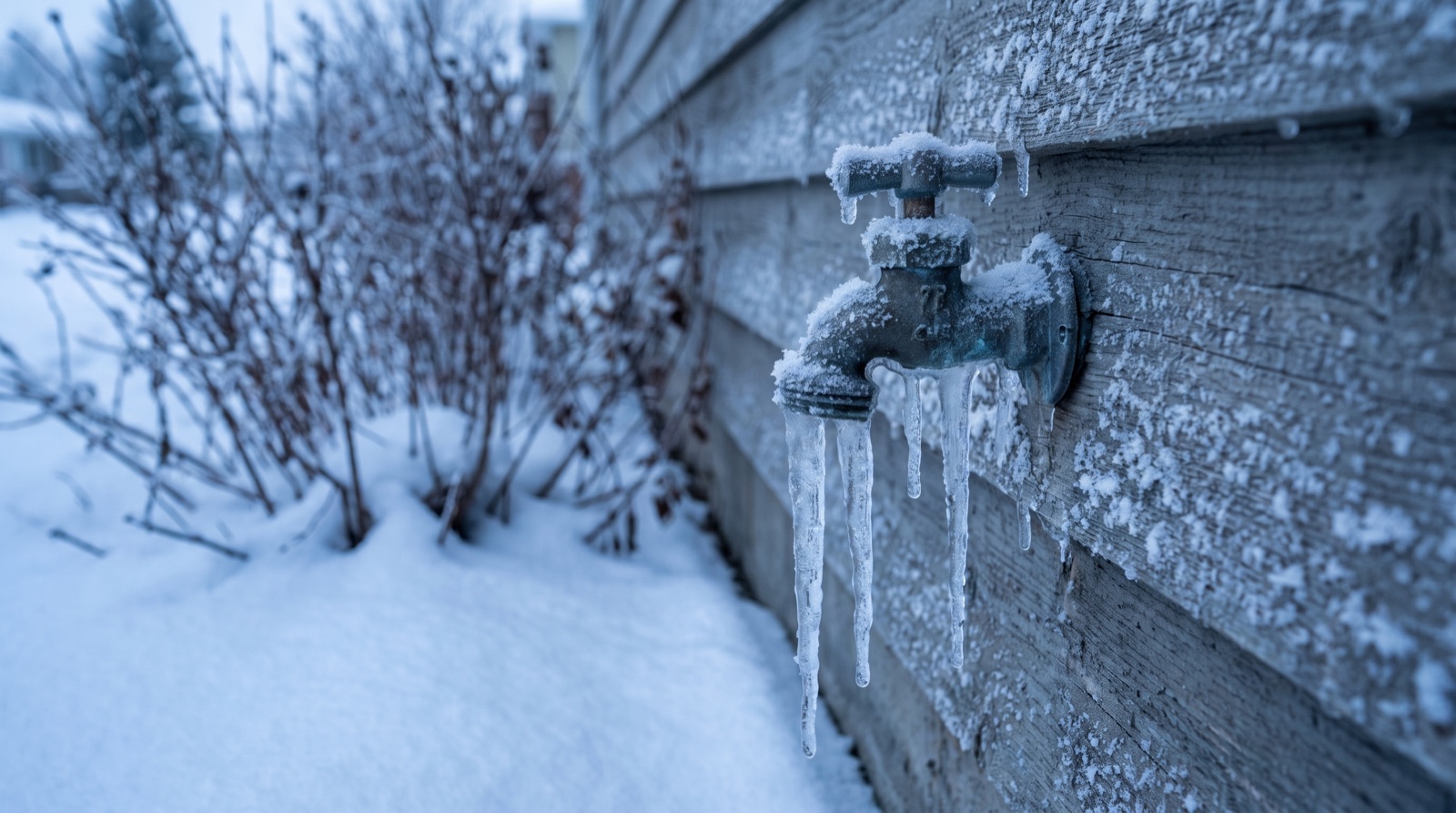
Outdoor hose bibs. The number one cause of winter water damage in Okanagan homes, by a wide margin. A hose left connected traps water in the bib and in the short run of pipe behind it, inside the wall. That splits over winter, and it does not leak at all until the first spring watering, when the homeowner turns it on and pours water into the wall cavity behind them.
Crawlspace runs. Very common in West Kelowna and Lake Country. Pipe running along the underside of a floor in a vented crawlspace, particularly near a vent or an access hatch, and especially any run near an exterior wall.
Garage walls and garage ceilings. Any water line running through an unheated garage. A laundry room, bathroom or utility sink on the far side of a garage wall is a classic setup.
Exterior wall plumbing. A kitchen sink on an outside wall, or a bathroom on the cold side of the house. Insulation behind the pipe rather than in front of it is a common builder error, and it puts the pipe on the cold side of the insulation.
Irrigation backflow assemblies and lines. Above ground, exposed, and full of water unless properly blown out.
Vacation and seasonal homes. A house set to a low temperature with nobody in it for weeks is the highest risk property type in the valley.
Anything near an open vent, hatch or missing insulation. Cold air finds one path and freezes one pipe.
The October checklist
Do this before the first hard freeze, not during it.
1. Disconnect every hose. All of them. Then drain the hose. This single task prevents more damage than anything else on this list.
2. Shut off and drain the hose bibs. If your bibs have interior shut off valves, close them, then open the outdoor bib to drain the line and leave it open through winter. If you have frost free bibs, they still need the hose disconnected to drain properly, which is exactly why people with frost free bibs still get splits.
3. Blow out the irrigation. Not just drained, blown out with compressed air. Water sitting in a lateral or in a backflow assembly is a spring repair waiting to happen.
4. Close crawlspace vents. Reopen them in spring. If yours are permanently open, that is worth a conversation about the crawlspace insulation strategy.
5. Insulate exposed pipe in the crawlspace, garage and rim joist. Foam sleeve on the pipe, and check the insulation around it is on the cold side, between the pipe and the outside.
6. Seal the air leaks. Insulation slows heat loss, but a direct draught from an unsealed rim joist, a hatch, or a hole where a line passes through a wall will freeze a pipe through the best insulation you can buy. Cold air movement is the actual enemy.
7. Find your main shut off and confirm it closes. Then show everyone in the house. A seized main shut off turns a manageable event into a catastrophic one, and it is a small job to replace.
8. If you have heat trace cable, test it now. These fail quietly. Confirm it energises before you need it.
9. Check the hot water tank area and any exterior mechanical space.
During a cold snap
Open cabinet doors under sinks on exterior walls so household heat reaches the pipes.
Leave a pencil thin trickle running from the fixture furthest from the main, on the coldest night. Moving water is much harder to freeze, and a trickle relieves the pressure that actually causes the split. The water cost of a few nights of this is trivial against a burst pipe.
Do not set the thermostat back overnight during an extreme cold event. The overnight setback is precisely when the pipe in the wall drops below freezing.
Keep the garage door closed if there is any plumbing in there.
If you are away, do not set it to ten degrees. Set it to at least fifteen, and have someone check the house. Better still, shut the water off at the main and drain the system if the house is empty for weeks.
If a pipe freezes
You will usually notice because one fixture produces nothing while others work.
1. Open the tap that fixture feeds. Leave it open. As the ice melts, the water needs somewhere to go, and an open tap relieves pressure.
2. Shut off the water at the main. Do this before thawing anything, not after. If the pipe is already split, you have just prevented the flood.
3. Warm it gently and from the tap end backward. A hair dryer, a heat lamp, a space heater in the room, warm towels wrapped around the pipe. Start closest to the open tap and work back toward the frozen section, so meltwater can escape.
4. Never use an open flame. No torches, no propane heaters aimed at pipe. It is the leading cause of house fires during cold snaps, and on plastic pipe it destroys the pipe outright.
5. Watch for water as it thaws. This is the moment a split reveals itself. Stay there while it clears.
6. If you cannot locate the frozen section, or it is inside a wall, call. Trying to thaw a pipe inside a finished wall by heating the wall rarely works and often means opening drywall in the wrong place.
After the thaw, check for what you missed
When the cold breaks, walk the house. Look at the ceiling below any bathroom, at the crawlspace, at the garage wall, and at the base of every exterior wall. A pipe that split under pressure and then refroze can stay quiet until the whole system warms up.
And in spring, before you use an outdoor tap for the first time, have someone inside the house watching the wall behind it while you turn it on. That is when winter's damage introduces itself.
What it costs, either way
Prevention is an afternoon and the price of a few foam sleeves. A frozen pipe repair, caught early with clean access, is typically a $300 to $900 call. A burst line that ran unattended into a finished ceiling is a restoration project, and it is measured in the thousands regardless of what your policy covers.
Most home policies in British Columbia cover sudden and accidental water damage but will look closely at whether the home was adequately heated and maintained. A house left at ten degrees while the owners were away for three weeks is exactly the scenario that gets scrutinised.
View Ultimate Plumber on the Okanagan Trade Directory
Ultimate Plumber is the plumbing arm of Timbercove Construction Ltd, a local owner operated company serving West Kelowna, Kelowna and Lake Country. Work is carried out by journeyman plumbers and gasfitters, and the company handles burst pipes and urgent leaks for homes and businesses, alongside leak detection, drain cleaning, hot water tanks and its Poly-B repiping specialty. Call 250-469-4046 or request a callback.