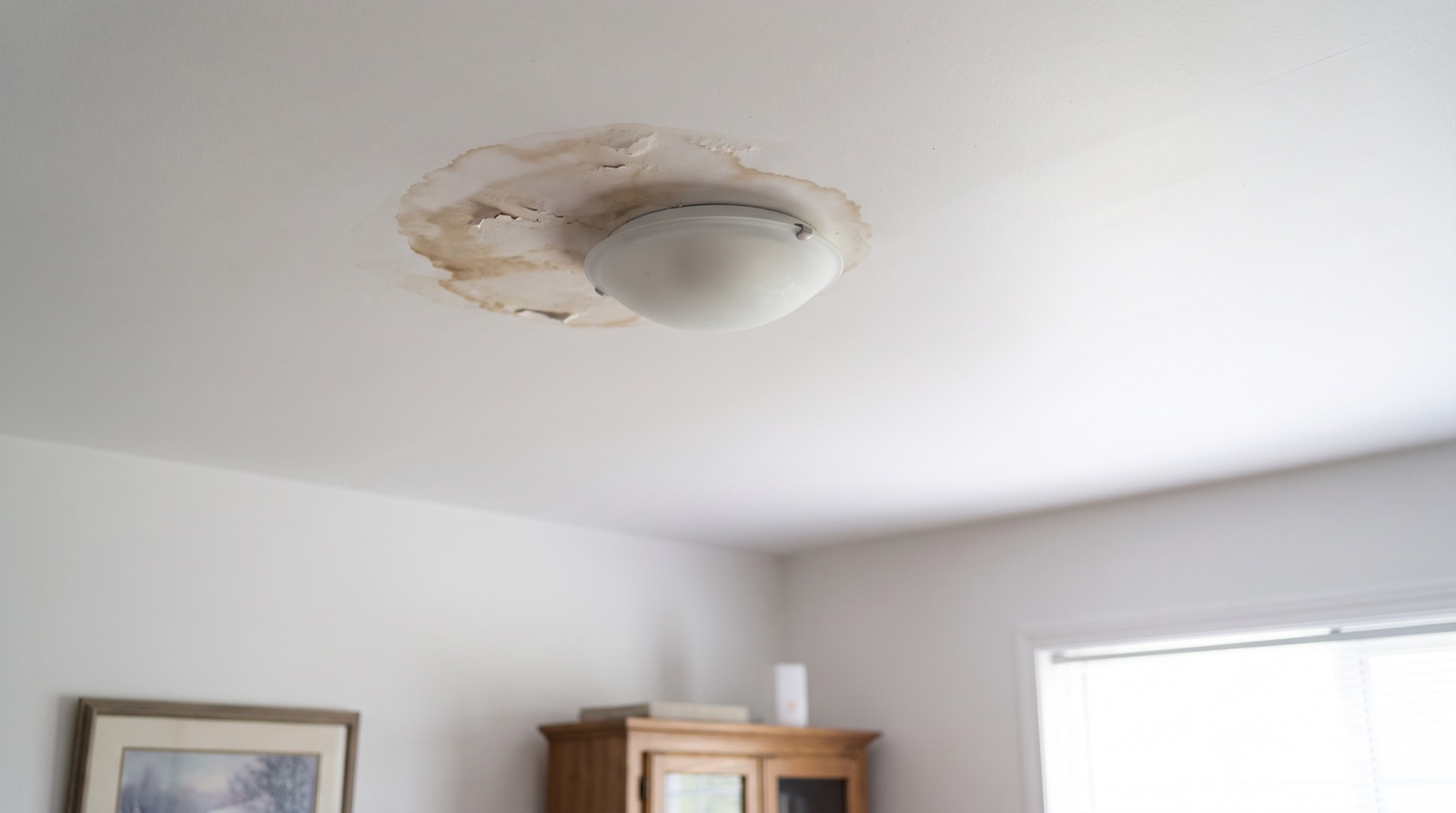
Hidden Water Leaks in Kelowna Homes: The Signs Before the Damage
Almost nobody calls a plumber about a hidden leak on day one. They call on the day the ceiling stains, or the day the water bill lands, or the day the laminate in the hallway starts to cup. By then the leak has usually been running for weeks.
The useful part is that hidden leaks are not actually silent. They announce themselves in small, easy to dismiss ways for a long time first. Here is what those look like in Kelowna homes, and the fifteen minute test that turns a suspicion into a fact.
The signs, roughly in the order they appear
Your water bill moves and your habits did not. This is the earliest reliable signal and the most commonly ignored one. Compare the same quarter year over year rather than month to month, because irrigation season swamps everything else. A jump of even a few cubic metres with no change in occupancy is worth investigating.
A faint musty smell in one room. Usually a lower level, a closet backing onto a bathroom, or a corner of a basement. Human noses adapt fast, so people stop noticing within a week. If a visitor mentions it, take it seriously.
Paint or drywall that looks slightly wrong. Not a stain yet. A patch that looks faintly duller than the wall around it, a nail pop that was not there, a baseboard with a hairline gap at the top, tape seams that have started to show.
Flooring that has changed shape. Laminate edges lifting or cupping, hardwood that has crowned in one area, a tile that has started to sound hollow when you tap it, vinyl with a soft spot.
Warm spots on a floor. Under a slab or in a crawlspace, a leak on a hot water line can warm the floor above it. If one patch of tile is noticeably warmer, that is not normal.
Running water you can hear when nothing is on. Stand in the quietest part of the house late at night with everything off and listen. A faint continuous hiss or trickle inside a wall is exactly what it sounds like.
A toilet that refills on its own. A flapper that leaks past can pass a startling amount of water, quietly, forever. It is the single most common cause of a mysterious water bill and it is also the cheapest thing on this list to fix.
Mould in a place that has no obvious source. Along a baseboard, behind furniture on an interior wall, inside a vanity cabinet.
Pressure that has dropped a little. Usually a later sign, and usually only noticeable if you know what your shower normally does.
The meter test, which anyone can do
This takes fifteen minutes and it settles the question of whether water is leaving your system.
1. Turn off every water using thing in the house. Taps, dishwasher, washing machine, ice maker, humidifier, irrigation. Ask everyone in the house not to use water for the duration.
2. Find your water meter. In most Kelowna homes it is at the front of the crawlspace or basement where the service enters, or in a lid at the property line.
3. Read it exactly, including the small leak indicator dial or triangle if yours has one. Photograph it.
4. Wait an hour or two with no water use at all.
5. Read it again.
If the reading moved, water is leaving your system somewhere. If the small leak indicator is turning at all during a no use period, that is a live leak by definition.
To narrow it down, close the main shut off to the house and repeat the test. If the meter still moves with the house isolated, the leak is in the service line between the meter and the house, which is a different and more urgent conversation. If it stops, the leak is inside.
To rule out toilets first, put a few drops of food colouring in each tank, wait twenty minutes without flushing, and look in the bowls. Colour in the bowl means that toilet is leaking past the flapper. Fix those and retest before you go any further, because they hide everything else.
What Kelowna homes leak from, specifically
Poly-B fittings. A very large share of the valley's 1985 to 1997 housing stock still has Poly-B water lines, and when they fail it is usually at a crimped fitting rather than mid run. Slow weeping at a fitting inside a wall is a classic hidden leak, and it often precedes a much larger failure. If you have grey pipe and an unexplained damp spot, treat it as a priority.
Original angle stops under sinks and toilets. Thirty year old shut off valves weep at the packing nut. Easy to see if you look, easy to miss if you never open the cabinet.
Supply lines to appliances. Braided washing machine hoses, dishwasher supply lines, fridge ice maker lines. The ice maker line is the quiet champion of this category because it runs behind an appliance nobody moves.
Shower valves and pan liners. A leak here often shows up on the ceiling of the room below rather than in the bathroom itself.
Hot water tank fittings and the tank itself. Check the drain pan. If there is no pan, that is worth adding.
Hose bibs and irrigation. Especially in spring, when a bib that split over winter starts leaking into the wall the first time it is used.
When it stops being a small job
Call sooner rather than later if any of these are true:
- There is visible water in the ceiling, the wall, or standing anywhere.
- The floor is soft underfoot.
- An electrical fixture or outlet is anywhere near the wet area. Stop, shut the water and the affected circuit off, and get a professional in.
- You cannot find your main shut off, or it will not close. This is worth fixing on its own, before you need it.
- The meter moves with the house isolated, meaning the service line is leaking.
What professional leak detection actually involves
The point of calling someone is to open the smallest hole in the right place rather than a series of holes in the wrong ones.
A proper leak location visit generally includes isolating sections of the system and watching the meter to narrow the area, checking the obvious mechanical suspects first, and using acoustic listening equipment, thermal imaging or moisture meters to pin the location before anything is cut. On a pressurised line the leak is often findable to within a small area without demolition at all.
For a straightforward inside the house leak, expect the location work to be a short visit. The repair is then priced on what was found and how accessible it is. The most expensive version of this is always the one where somebody guessed and opened three walls.
The insurance angle, briefly
Most homeowner policies in British Columbia cover sudden and accidental water damage and do not cover damage from a leak that has been going on for a long time. That distinction is exactly why the early signs on this page matter financially and not just practically. A stain you noticed and acted on is a very different claim from a stain you lived with for a year.
Photograph what you find, note the date, and keep the invoice for the repair.
The short version
If your bill moved and your habits did not, run the meter test tonight. If the meter moves with everything off, you have a leak, and the only remaining question is where. Finding it early is a plumbing bill. Finding it late is a restoration project.
View Ultimate Plumber on the Okanagan Trade Directory
Ultimate Plumber is the plumbing arm of Timbercove Construction Ltd, a local owner operated company serving Kelowna, West Kelowna and Lake Country. Work is carried out by journeyman plumbers and gasfitters, and the company handles leak detection and repair, dripping fittings, damp spots, leaking appliances and unexplained jumps in the water bill, alongside its Poly-B replacement and repiping specialty. Call 250-469-4046 or request a callback.