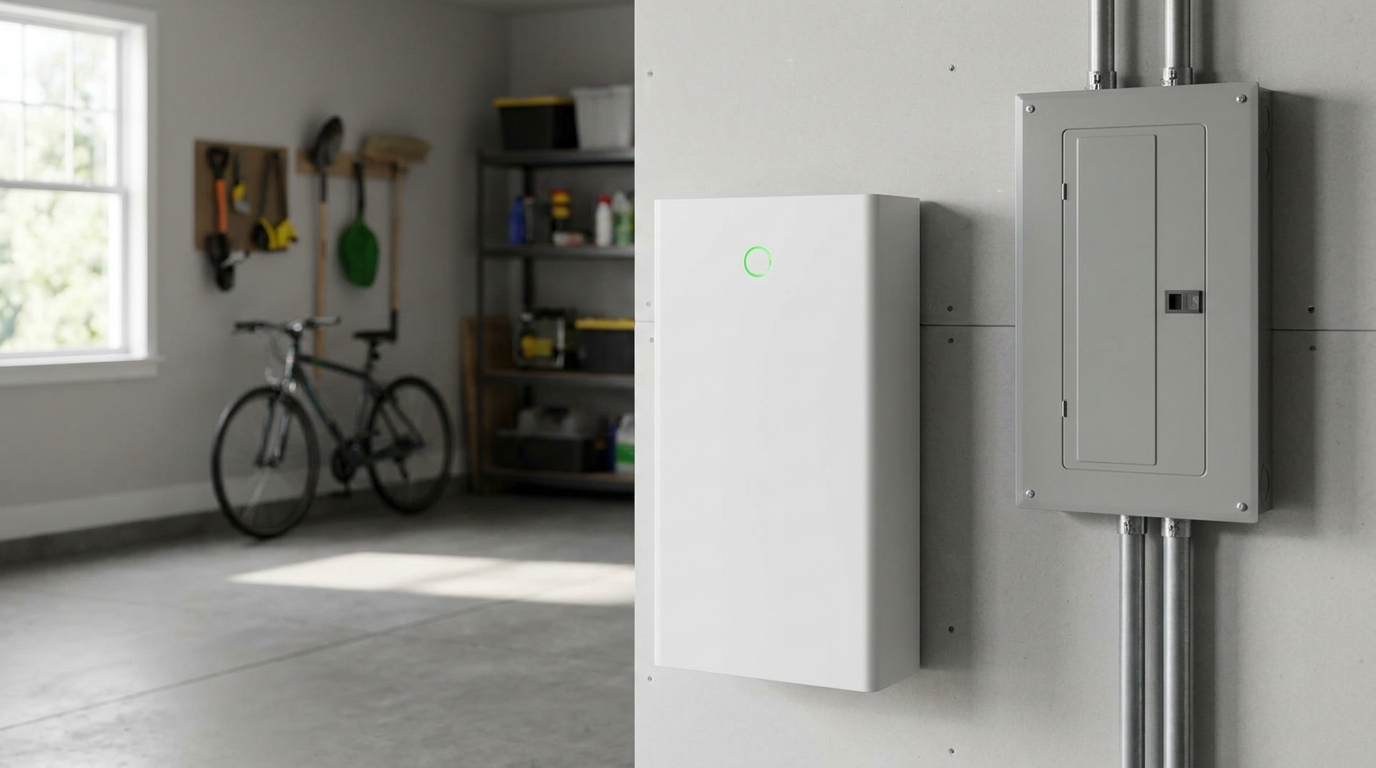
If you're weighing rooftop solar in the Okanagan, you've probably run into the next question fast: should you add a battery too? It's a real decision with a real cost attached, and the honest answer is "it depends on what you want the battery to do." A home battery solves two different problems, and it's worth being clear about which one matters to you before you pay for storage you may not need.
What a home battery actually does
A grid-tied solar system without a battery is simple: your panels power your home during the day, and any surplus flows out to the grid for a credit. The catch is that a standard grid-tied system shuts down during a power outage, even in bright sun — that's a safety requirement so power isn't fed back onto lines that utility crews may be working on. Without storage, a blackout leaves you dark despite having panels on the roof.
A battery changes that in two ways:
- Backup power. When the grid goes down, a battery paired with the right inverter can keep chosen circuits running and let your panels keep recharging it through the day.
- Self-consumption. Instead of exporting your midday surplus and buying power back at night, a battery stores your own daytime solar and releases it in the evening, so more of what you use is power you already generated.
Those are separate jobs. Some homeowners want the first, some want the second, and the right battery size depends on which you're solving for.
Why Okanagan homeowners in particular consider storage
Two things make batteries more interesting here than in a calmer climate. The first is our outage pattern. Wildfire season, summer wind and lightning storms, and the occasional winter cold snap all put strain on the grid, and rural and semi-rural properties around the valley can see longer outages when a line goes down. If you've ever lost a freezer full of food or spent an evening without your well pump, backup power isn't abstract.
The second is timing. Solar production peaks midday, but Okanagan household demand peaks later — air conditioning running into a hot evening, everyone home cooking, EVs plugging in. A battery bridges that gap, shifting your own clean daytime power into the hours you actually use the most.
How a battery fits with net metering
This is where people get tripped up. If your utility credits the power you export at a good rate, exporting surplus and drawing it back later already works a bit like a "virtual battery" on your bill. In that case a physical battery is mostly about resilience — keeping the lights on in an outage — rather than saving money.
Where the math shifts is when exported power is credited at less than what you pay to buy it back. Then every kilowatt-hour you can use yourself, instead of selling low and buying high, is worth more, and a battery that boosts self-consumption starts to earn its keep. Because the rules differ by utility and change over time, the sensible move is to have your installer model your specific bill both ways rather than assume storage pays for itself. There are also provincial rebates that have at times included battery storage — confirm what's currently available for your address before you count it in, because these programs open and close.
Sizing: whole-home backup vs. the essentials
You don't have to back up your entire house, and for most homeowners it isn't the smart choice. Whole-home backup — including big loads like central AC, electric heat, and a hot tub — needs a large, expensive battery bank. A more common and cost-effective setup is an essentials backup: a dedicated critical-loads panel covering your fridge and freezer, furnace fan, well pump, internet, and a few lights and outlets. That can carry a household comfortably through a typical outage for a fraction of the cost, and your panels top the battery back up each day the sun is out.
A good installer will walk your home, ask what you can't live without during an outage, and size storage to that answer — not to a headline number.
Questions worth asking before you buy storage
- What am I actually solving — backup, self-consumption, or both? The answer drives the size and the price.
- Which loads do I want to keep running in an outage, and for how long? That defines the battery capacity, not the sales sheet.
- How does my utility credit exported power today? This decides whether a battery saves money or mainly buys resilience.
- Is my system "battery-ready" if I wait? You can often install solar now and add storage later — ask how to wire for that so you're not paying twice.
- What's warranted, and by whom? Batteries carry their own warranties separate from the panels; get them in writing.
Talk to a local installer who does both
Storage is a long-term addition to an electrical system on your home, so the installer matters as much as the hardware. Okanagan Solar Ltd has designed and installed residential and commercial solar across the valley since 2009, and their work includes battery backup systems and EV charging alongside PV — so they can look at your roof, your bills, and your outage risk together and tell you whether a battery is worth it for your situation. You can review their services and get in touch through their Okanagan Trade Directory profile.
The bottom line: a battery isn't automatically part of going solar, and you shouldn't buy one just because it's on offer. But if reliable backup power matters to you, or your utility no longer credits exported solar at full value, storage can be the piece that makes a system genuinely fit how an Okanagan home lives. Decide what you want it to do first — then size it to that.