How Often Should You Pump Your Septic Tank in Kelowna?
If your Kelowna-area home isn't on municipal sewer, your septic tank is quietly doing one of the most important jobs on the property. It also happens to be one of the easiest systems to forget about until something goes wrong. The single most common question we hear from Central Okanagan homeowners is a simple one: how often does the tank actually need to be pumped? This guide answers that clearly, explains what British Columbia's rules require, and walks through the warning signs worth watching for out here in the Okanagan.
How often should a septic tank be pumped in the Okanagan?
For most single-family homes, the rule of thumb is every two to five years. That range exists because no two households use water the same way, and the right interval depends on a handful of local factors we'll cover below.
British Columbia is more specific than the rule of thumb, though, and the exact requirement depends on which type of system you have:
- Type 1 systems (a conventional septic tank feeding a dispersal field) are generally expected to be pumped at least once every five years. Five years is meant to be the *maximum* interval, not a target — many homes need pumping every two to three years.
- Type 2 and Type 3 systems (which include additional treatment components) must be maintained by an authorized person at least once per calendar year, following the system's registered maintenance plan.
If you don't know which type you have, that's worth finding out. Systems installed in BC since 2005 were registered with the health authority and came with a prescribed maintenance plan, and that plan sets your obligations.
What decides how often *your* tank needs pumping?
The two-to-five-year range narrows quickly once you look at the specifics of your household. The biggest factors are:
- Tank size. A smaller tank fills its sludge and scum layers faster and needs more frequent service.
- Number of people in the home. More residents means more wastewater and solids entering the tank every day.
- Water usage habits. High-volume laundry, long showers, hot tubs, and homes on well water without flow limits push more liquid through the system.
- What goes down the drain. Fats, oils, grease, "flushable" wipes, coffee grounds, and harsh chemicals all shorten the healthy interval and can cause blockages.
- Age and condition of the system. Older tanks and dispersal fields have less margin for error.
Two identical tanks on the same street can end up on very different schedules simply because one house has two occupants and the other has six. That's why the safest approach is to have the tank inspected and its sludge levels measured, rather than guessing from the calendar alone.
What are the warning signs your septic tank needs pumping?
Ideally you pump on a schedule and never reach the warning-sign stage. But if you notice any of the following, treat it as urgent — a septic backup is both a health hazard and a costly one:
- Slow drains throughout the house — not just one sink, but multiple fixtures draining sluggishly.
- Gurgling sounds from toilets or drains.
- Sewage odours indoors, near the tank, or over the drain field.
- Soggy, unusually green, or spongy ground above the dispersal field, even in dry weather.
- Sewage backing up into the lowest drains or toilets in the home.
In the Okanagan's cold snaps, a struggling system can be pushed over the edge by frozen ground reducing how well the drain field absorbs effluent, so late fall is a sensible time to check that you're not overdue.
What does BC actually require of septic owners?
Onsite sewage systems in BC are governed by the Sewerage System Regulation under the Public Health Act, with technical guidance set out in the province's Sewerage System Standard Practice Manual (SPM). In the Okanagan, Interior Health is the authority that oversees registration and compliance for these systems.
A few things follow from that framework that every rural or acreage homeowner should know:
- You, the owner, are legally responsible for maintaining your system according to its plan. That responsibility doesn't disappear just because the system seems to be working.
- Maintenance and repairs must be carried out by an "authorized person" — either a Registered Onsite Wastewater Practitioner (ROWP) or a Qualified Professional such as an engineer. This isn't a formality; it's how the province keeps groundwater and surface water safe.
- Keep your records. Pumping receipts, inspection reports, and your maintenance plan are exactly what a buyer's agent, home inspector, or Interior Health may ask to see.
That last point matters a great deal in a market like ours. When you sell an Okanagan property on septic, documented maintenance history is one of the smoothest ways to keep a deal moving — and a neglected system is one of the fastest ways to derail one.
What happens during a professional septic pumping?
A proper service visit is more than just emptying the tank. A thorough pumping typically includes:
1. Locating and uncovering the access lids to both compartments of the tank.
2. Vacuuming out the liquid, floating scum layer, and settled sludge using a high-powered tanker truck, restoring the tank's full working capacity.
3. A visual inspection of the tank walls, baffles, and inlet/outlet tees for cracks, corrosion, or blockages.
4. Checking the effluent filter (if the system has one) and cleaning it.
5. A report on anything of concern — damage, root intrusion, or signs the drain field is struggling.
Modern operators supplement this with tools like jetting systems to clear blocked lines and CCTV camera inspections to see inside pipes without digging. That combination is how a pumping visit doubles as an early-warning system: catching a hairline crack or a partial blockage now is far cheaper than replacing a failed dispersal field later.
Can you extend the time between pumpings?
You can't skip maintenance, but you can absolutely lengthen the healthy interval with good habits:
- Conserve water and spread out heavy use — don't run four loads of laundry in one afternoon.
- Keep grease, wipes, and chemicals out of the drains. The only things that belong in a septic system are wastewater and toilet paper.
- Protect the drain field. Don't park vehicles, build structures, or plant deep-rooted trees over it.
- Fix leaks promptly. A running toilet can quietly flood a tank with far more water than it was designed to handle.
- Have it inspected on schedule so small problems are caught before they become emergencies.
None of this replaces pumping — solids still accumulate no matter how careful you are — but it keeps your system healthy and your service intervals reasonable.
Finding septic service in the Central Okanagan
Because BC requires that septic work be done by authorized professionals with the right equipment, this isn't a DIY job. When you're choosing a provider, look for one that services your area, uses proper vacuum tankers, and can inspect the system while they're on site rather than just emptying and leaving.
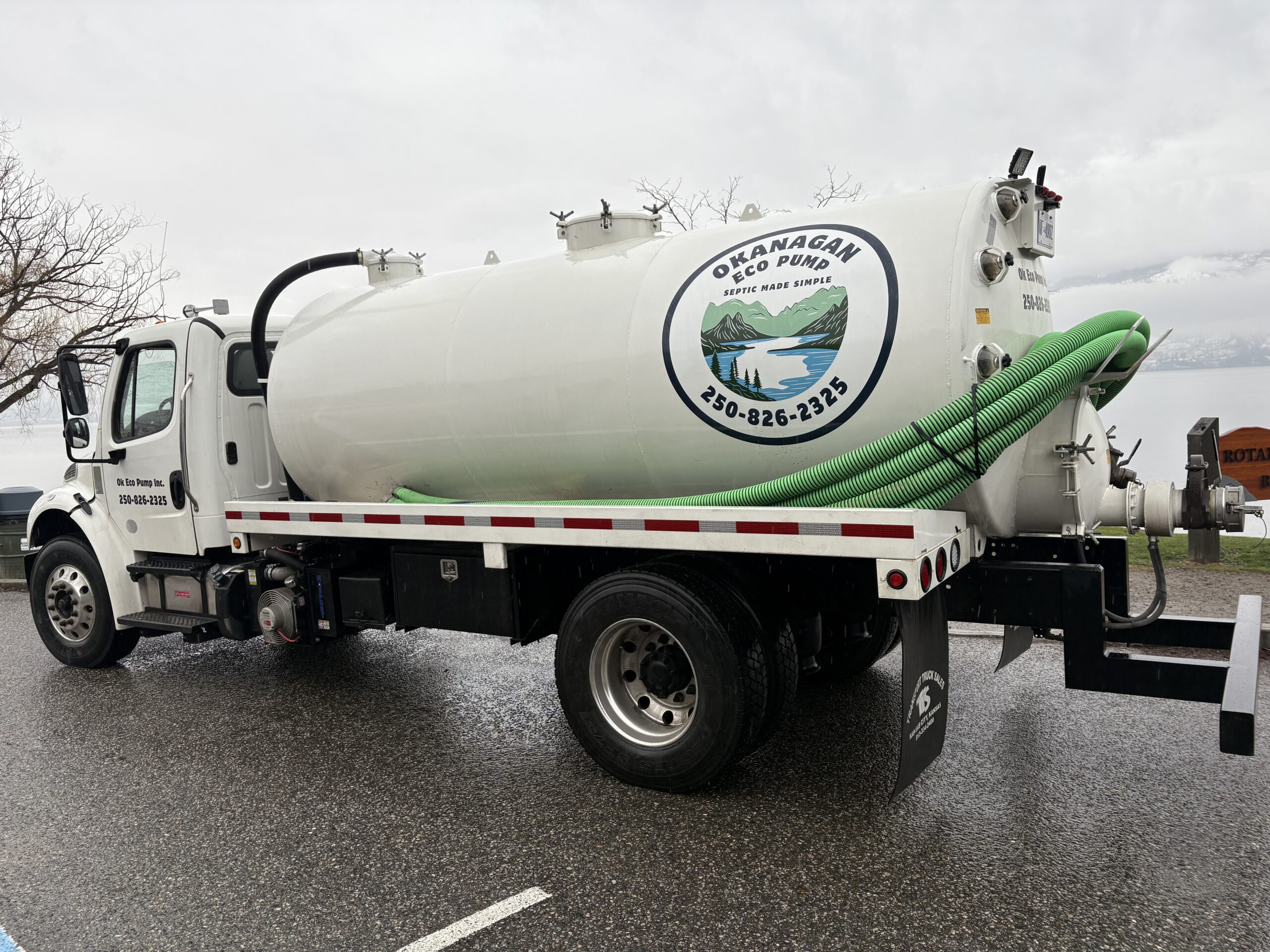
Among the local options, OK Eco Pump Inc. is a Kelowna-based company offering septic tank pumping, cleaning, inspections, and repairs for residential, commercial, and rural properties across the Central Okanagan, using vacuum tankers, jetting systems, and CCTV inspection tools, with 24/7 emergency service for urgent failures. As with any provider, confirm current availability and pricing directly.
The short answer
Plan on pumping most Okanagan household septic tanks every two to five years, verify the exact requirement for your system type under your Interior Health maintenance plan, and treat slow drains, odours, gurgling, or wet spots over the drain field as reasons to call sooner. A tank that's serviced on schedule is cheaper to own, safer for the groundwater we all rely on in this valley, and far less likely to become a bad surprise on the day you decide to sell.