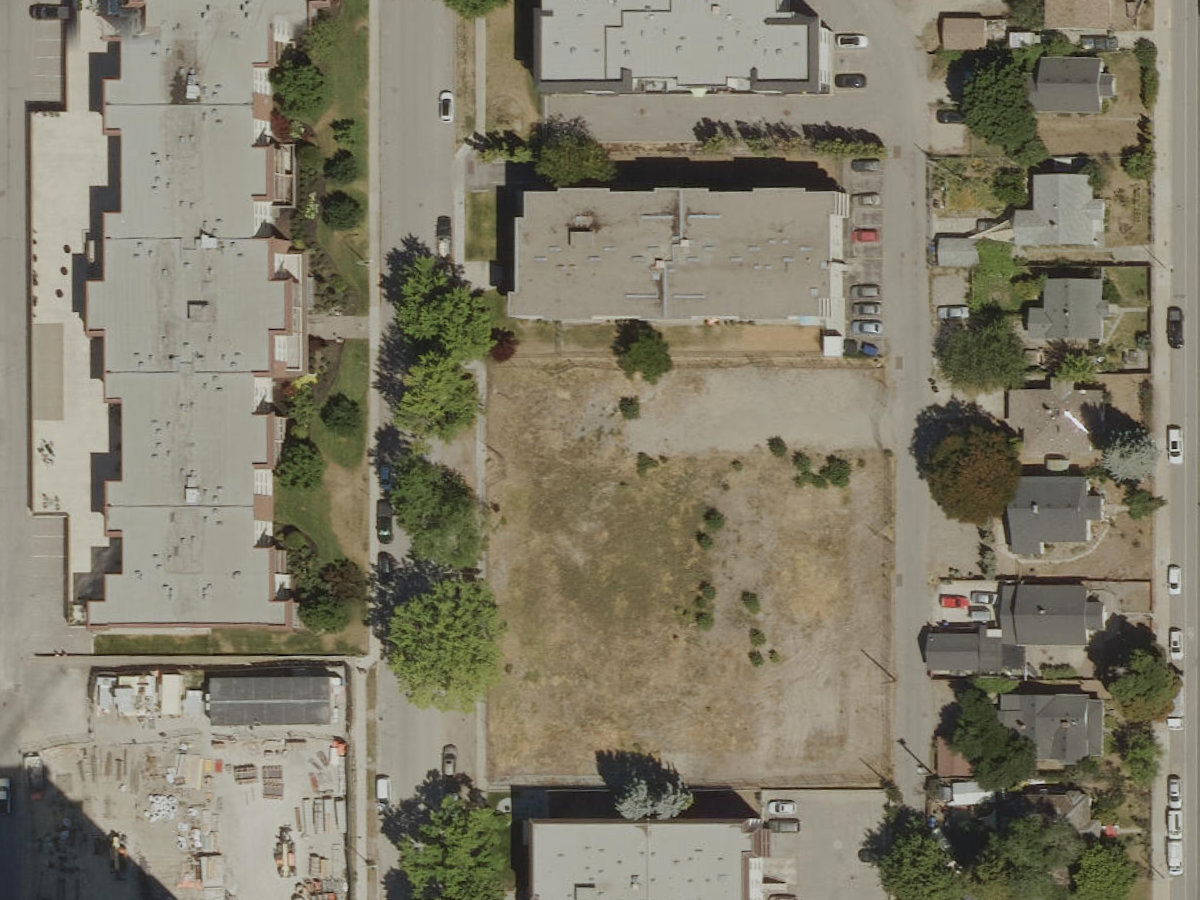
BC Housing’s published account says its planned rental development at 1451 Bertram Street was cancelled in its current form. That leaves an unresolved question in the public record for the downtown Kelowna site: what could replace the 176-home plan?
The project had been intended to deliver 176 rental homes. BC Housing says it still owns the land and is exploring future options, but its public project page, current as of September 22, 2026, does not announce a replacement. The cancellation applies to the proposal as it stood, not necessarily to every future housing use of the property.
What was planned
The provincial government's 2026/27 housing service plan described a 176-unit building with studios, one-, two- and three-bedroom homes. The plan anticipated a mixture of non-market and affordable market rental housing, with families among the intended residents. It also noted that the development could include child care.
An earlier development submission showed a 20-storey tower and townhouses. Plans and budget documents are snapshots of a proposal, however, not evidence that a building was constructed or that every feature remained in the final version.
BC Housing says it began planning and design in 2018 in partnership with M'akola and the City of Kelowna. The agency's timeline lists rezoning and development permits among the steps completed before the 2026 cancellation.
Why BC Housing cancelled it
BC Housing points to changing rental market conditions, including stabilizing rents, softer demand and higher vacancy rates. It says those changes made the project less financially viable and that the proposal no longer represented an efficient use of public funding.
That explanation does not settle the policy question. A project can be expensive for the public to deliver while some households still struggle to find a suitable home. Conversely, supporting affordable housing does not make the economics of every proposal the same. An updated public cost breakdown and comparison with alternatives would help residents judge the decision.
The province's earlier service plan listed an anticipated total cost of $120 million. That was a planning figure, not proof of the amount spent or a current estimate for a replacement. The same plan showed $2 million in project costs through December 31, 2025. It does not establish the final amount spent before cancellation.
What could happen next?
BC Housing says it is exploring future options for the site. A smaller building, a revised mix of homes or another approach may be worth examining, but none should be described as an approved replacement on the strength of that statement alone.
For local trades, a new proposal could mean future construction work; for renters, the outcome depends on whether a revised project proceeds and what homes and rents it ultimately provides. Neither outcome is guaranteed by ownership of the site.
The public questions are straightforward: What alternatives are being evaluated? How many homes could each provide, at what cost and on what timeline? And what level of affordability would be secured? The reviewed sources do not supply a confirmed replacement plan. BC Housing’s webpage still carries a September 22, 2026 content-freshness notice, so it cannot by itself rule out a later decision that has not been posted there.
What do you think? Should public housing on the site go ahead in a revised form, or should the province use the land and funding differently?