
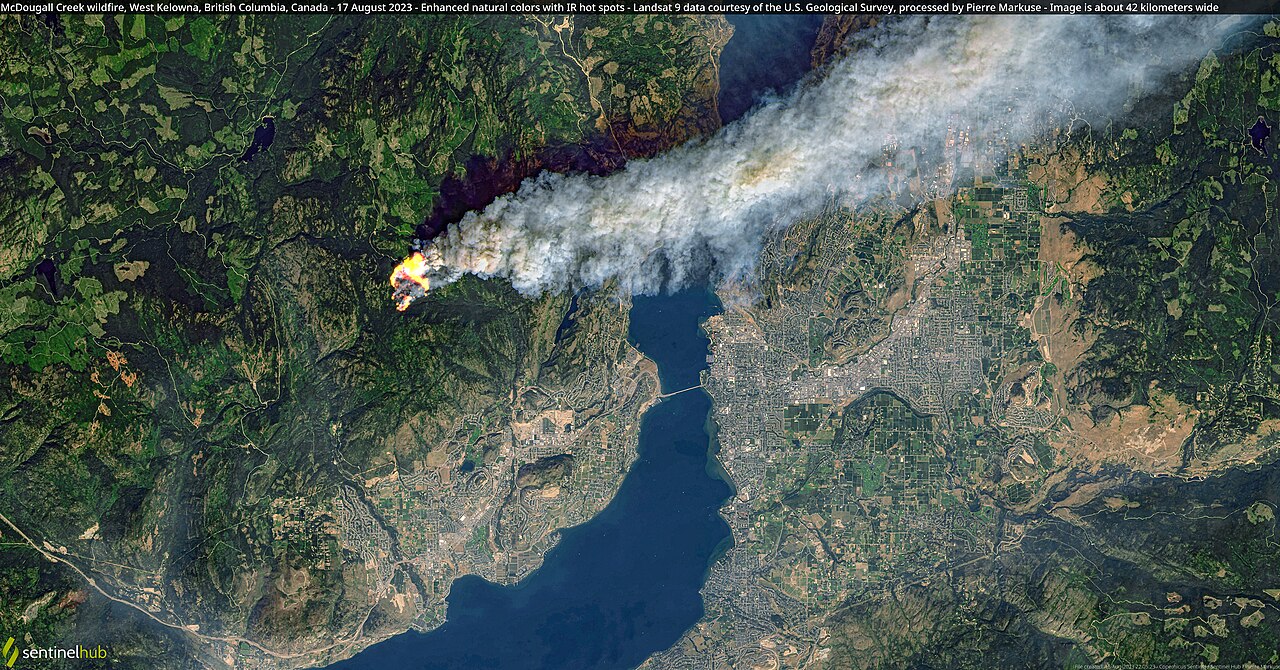
Rebuilding after a wildfire is more than a construction project. For affected Okanagan property owners, it can involve insurance decisions, permits, utilities, site hazards and choices about how to reduce future fire risk. The result is a difficult public question: when safer rebuilding costs more, who should pay?
The 2023 McDougall Creek wildfire affected properties in multiple jurisdictions. The Regional District of Central Okanagan directs residents to the appropriate authority for rebuilding: West Kelowna, Westbank First Nation or the regional district, depending on the location. Requirements and processes should not be assumed to be identical across all three.
Getting a rebuild ready
West Kelowna’s current building-permit page directs applicants to a new-construction checklist, warranty documentation and water or septic records where applicable. Its processing targets depend on a complete application and can change with referrals and site requirements. Owners should use these current checklists rather than rely on the initial post-fire package, and confirm any special rebuilding requirements with the department.
A building permit is a step toward construction, not proof a home has been completed or occupied. Counts of applications, issued permits and completed homes are different measures. An up-to-date comparison would need a current count from each jurisdiction and a clear definition of what is being counted.
Insurance and the cost of rebuilding
The provincial disaster recovery guidance advises people to review their insurance and says homes must be rebuilt to current building code standards rather than the standards in place when they were originally built. What an individual policy covers depends on its terms and limits. Owners should obtain advice on their own coverage rather than assuming a general rule applies to their claim.
B.C.'s 2025 disaster and climate risk assessment notes that higher fire-protection standards can be difficult to achieve because of insurance limits, building policies and cost. That is a province-wide assessment, not a calculation of what a particular West Kelowna family owes.
The distinction between a current code requirement and an optional extra is important. A proposed upgrade might improve resilience, but its cost and suitability depend on the property and design. An article cannot claim that a specific roof, siding or landscaping measure is required everywhere without checking the rules for the address.
Safety extends beyond the house
West Kelowna’s FireSmart program offers education and property assessments focused on practical ways to reduce wildfire risk. Its webpage contains both an open-applications notice and a notice that 2026 grant funding is unconfirmed. Owners should check availability before relying on a grant; this article does not promise reimbursement. Site and neighbourhood conditions matter alongside building materials: vegetation, access and proximity to hazards can affect how a property is exposed.
The regional district's Lake Okanagan Resort guidance illustrates another challenge: it says rebuilding there requires hazard mitigation and confirmation that essential services are secured. Those site-specific conditions should not be generalized to every property affected by the fire.
Public decisions about grants, insurance and standards involve trade-offs. Faster rebuilding can help people return; stronger protections may reduce future risk; both require money and careful planning. A current accounting of recovery progress and affected owners' experiences would make the debate more useful than a single proposed deadline.
What do you think? Should public programs cover more of the cost of resilient rebuilding, and how should support be targeted?
Sources
- Regional District of Central Okanagan: McDougall Creek wildfire rebuild
- City of West Kelowna: current building permits, checklists and inspections
- B.C.: disaster recovery information
- B.C. disaster and climate risk assessment
- West Kelowna FireSmart
- Photograph: Pierre Markuse, from Landsat 9 data courtesy of the U.S. Geological Survey; source and credit.jpg)
- Photo and applicable preview reuse licence