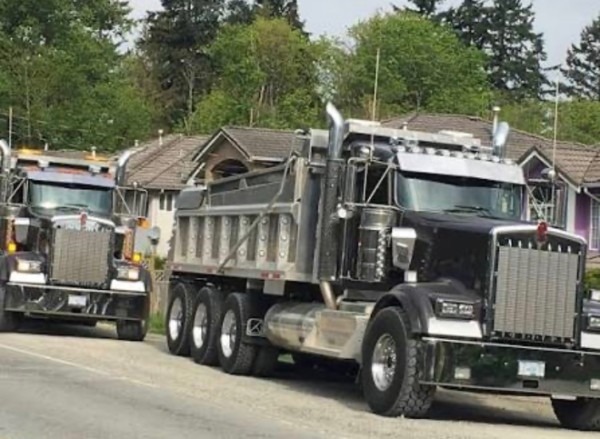
Photo: Ronin Earthworks.
When an Okanagan-based truck stops while working in the Fraser Valley, the driver, home dispatcher, site supervisor and repair provider may all hold different pieces of the story. The first useful task is to give them one shared record: where the unit is, what it is doing, who can authorize work and what the next decision requires.
This is a dispatch-planning guide for a business working away from its Okanagan base. It contains no report of a particular fleet's breakdown and makes no claim about today's road conditions, repair availability or travel time.
Photo context: Ronin Earthworks and Okanagan Trade Directory share an owner. The two Kenworth dump trucks illustrate a commercial fleet. The photograph does not document an Okanagan job, a breakdown or a Langley Mobile Truck Repair service visit.
Choose one coordinator and preserve the driver's observations
Have one person own the repair request, update the fleet and approve any change to the plan. Record the driver's words separately from a dispatcher or customer's interpretation. “Engine turns but does not start” is a different report from “would not turn at the key.” Neither description is a confirmed diagnosis.
The coordinator should know whether the truck is safely parked in a yard, at a jobsite or in a roadside position. A mechanic cannot promise a suitable work area from a map pin alone. If the location is unsafe, prioritize the appropriate emergency or recovery response before collecting extra photographs or trying to save a dispatch charge.
Keep the time of every material update. A report made before the vehicle was moved may no longer describe the current position or symptoms.
Assemble the away-from-base handoff
- Unit identity: fleet number, year, make, model, engine if known and the relevant trailer or attachment.
- Exact location: a pin, street address where available, direction of travel if relevant, and the actual yard entrance.
- Current condition: whether the engine starts, whether the unit can move, exact warning messages and any visible leak or damage observed from a safe position.
- Timing: when the issue began, last normal operation and relevant recent maintenance.
- People: driver's contact, site contact and the one person authorized to approve costs.
- Work constraints: permission to repair on the property, access hours, loading commitments and any restriction on moving the unit.
- Documents: available inspection or maintenance records, existing photos and the fleet's purchase-order requirements.
Send confidential vehicle and billing details directly to the chosen provider. Public directory comments and social posts are poor places for full VINs, gate codes, personal contact details or customer paperwork.
Separate mechanical decisions from load and customer decisions
A repair assessment does not decide what happens to the freight, the customer appointment or the rest of the crew. Create a second short note for the operational consequences: who contacts the customer, whether a load can wait, and who arranges an alternative vehicle if required.
Ask the repair provider which question the first visit will answer. It might establish whether an on-site repair is feasible, what further testing is needed or whether recovery to a workshop should be considered. Do not describe an initial attendance window as a completion promise, and do not tell the customer a part is available before the supplier confirms it.
If the plan changes from diagnosis to recovery, carry the same unit identity, symptom history and authorization record to the next provider. That avoids starting the handoff again from a vague “truck broken” message.
Make the quote usable from the Okanagan office
An hourly rate alone is not an attendance estimate. Before approving dispatch, record how travel is counted, where it starts, the minimum charge, any fuel or after-hours component, and what diagnostic time includes. Ask whether parts collection, a return visit, recovery or workshop work would be a separate authorization.
Agree the billing name, purchase-order reference and payment contact before the driver is asked to improvise them. Ask the mechanic to contact the coordinator before work exceeds the agreed scope. When a supplier is paid directly, retain that invoice alongside the repair business's invoice so the maintenance file reflects both transactions.
Check the route separately, at the time of the decision
Use DriveBC for current provincial road information when considering a replacement vehicle, recovery destination or return journey. Check the actual route and the time of the update. This article does not establish a safe route, pass condition or journey duration, and a historical screenshot should not be reused as a current clearance.
Before an Okanagan truck leaves its home yard, also save the fleet's normal maintenance contact and a process for finding suitable help in the destination region. For work at home, use providers who actually serve the Okanagan; the OKTD directory is a starting point for checking published service areas and contacting businesses directly.
One Lower Mainland service example, with ownership disclosed
Langley Mobile Truck Repair shares an owner with Okanagan Trade Directory. Its roadside truck-repair page is an owner-affiliated Lower Mainland resource for a fleet already working in that region. It is not an Okanagan branch or a substitute for a suitable local provider at home.
Confirm the work, actual location, availability and current terms before authorizing attendance. The published contact is 778-887-5216. Including this example does not establish an independent endorsement, a response time or a successful repair outcome.
Close the loop when the truck returns
Keep the original complaint, technician's findings, approved changes, supplier receipts and final work report in the unit's maintenance file. Mark unresolved items and the person responsible for them. A truck moving again and a documented repair are different entries; both matter to the next dispatcher who handles the unit.