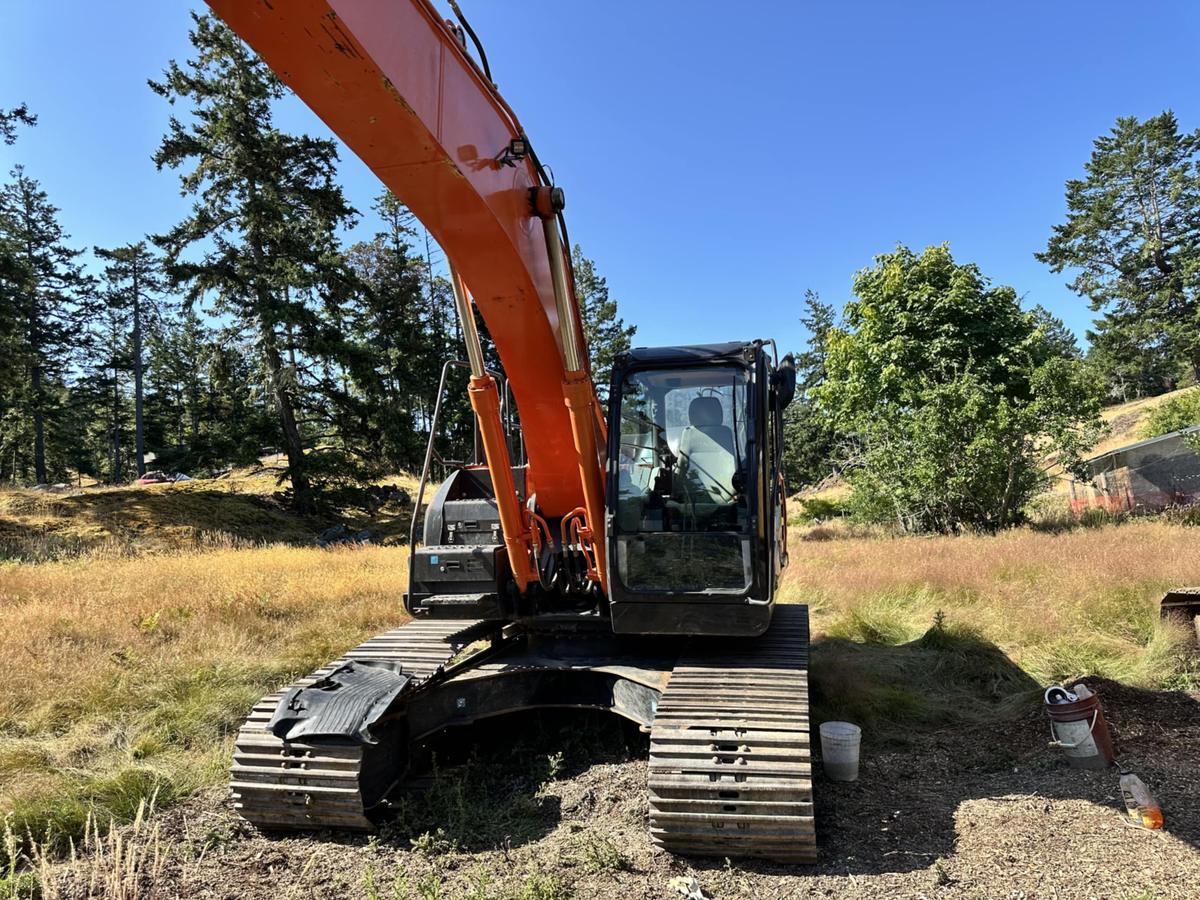
Photo: Ronin Earthworks.
A seller's description of a “small hydraulic leak” leaves several important questions unanswered. Where is the fluid appearing? Under what conditions? Which machine or attachment function is affected? What has been inspected, and what remains unknown?
For an Okanagan contractor comparing used equipment, a better next step is a written inspection brief. It lets the buyer, seller and qualified inspector agree what will be assessed before anyone treats an advertised price as the cost of a machine ready for work.
This is an evidence checklist, not a report of a particular sale or a method for diagnosing hydraulic faults yourself. It includes no repair-price estimate and no recommendation for a specific equipment seller.
Photo context: Ronin Earthworks and Okanagan Trade Directory share an owner. Its excavator photograph illustrates the type of working equipment discussed. It does not show a machine offered for sale, a documented hydraulic leak, an inspection or an Okanagan job.
Identify the exact machine and the included attachments
Record the make, model, product identification or serial number, operating hours and advertised configuration. Ask the seller to identify the attachments included in the sale and which were installed when the reported problem occurred.
Request the relevant service records and any previous inspection report. A seller's statement that a hose was replaced is useful history, but it does not establish the condition of every hose, fitting, cylinder or other component. Ask for the date, the work described and the record supporting it.
Keep advertised statements, seller answers and inspector findings in separate parts of your file. That prevents an unverified sales description from becoming an apparent professional conclusion when you compare machines later.
Turn “it leaks” into an observation record
- Where was fluid seen: on a component, beneath the machine or at an attachment connection?
- Was the machine parked or working when it was noticed?
- Which function was being used, if that is known?
- Was the report about seepage, a visible drip or another observed condition? Keep the seller's exact wording.
- When was the area last cleaned, topped up or repaired?
- Are there dated photographs and maintenance records that show the history?
- Has a qualified person identified the source, or is the source still unconfirmed?
Ask for photographs already available or images taken safely under an appropriate inspection plan. Do not ask a seller to create a pressurized leak, hold a hand near a suspected leak or stand beneath a raised attachment to obtain proof.
Caterpillar warns that high-pressure fluid escaping through a small leak can penetrate skin. Its maintenance guidance also places visual checks in the context of safely parked equipment. Agree the inspection method with a qualified person and follow the actual manufacturer's manual. A buying checklist does not make a hydraulic test safe.
Commission a defined inspection
Give the inspector the advertisement, machine identity, reported concern and records in advance. Ask what the proposed inspection includes, what cannot be established at the site and whether further testing or workshop facilities may be required. Confirm permission to inspect and who is allowed to operate the machine during any agreed assessment.
Useful scope questions include whether the report will address the observed fluid, affected function, visible component condition, relevant service history and outstanding testing. Ask how photographs and findings will be labelled, and how the inspector will distinguish an observation from a confirmed cause.
WorkSafeBC's lockout requirements address unexpected startup, movement and stored energy during maintenance. The parties should establish an appropriate procedure before inspection work exposes anyone to those hazards. Do not treat possession of the ignition key as a complete isolation plan.
Understand what a certification statement actually covers
Caterpillar describes a specific inspection and condition standard for its Cat Certified Used programme, with inspection reports available for those machines. That programme is an example of a documented scope. It does not mean every used Cat machine is certified, or that a seller's phrase “dealer checked” provides the same assurance.
If certification is part of the offer, ask which programme applies, which machine the document identifies, its date, who issued it and what terms or exclusions accompany it. Read the actual report. Do not carry one brand's programme conditions across to another manufacturer or an unrelated private sale.
Compare the purchase with the unresolved work visible
Use a short decision record for each candidate: asking price; inspection scope and cost; confirmed findings; proposed repairs; items still untested; transport arrangements; and the seller's response. Enter repair costs only from an actual scoped estimate. Leave unknowns labelled unknown rather than inserting a reassuring average from another machine.
If a repair is part of the proposed sale, ask what will be completed, what documentation will follow and whether a further assessment is included. Agree who authorizes changes if the first finding leads to additional work. Financing, transport and project timing should be considered using the actual transaction's terms, not an assumed quick repair.
Use the right regional help
Choose an inspector or repair provider who can assess the actual machine at its real location. For equipment in the Okanagan, verify local service coverage and capability directly. A machine bought elsewhere may need a provider in that market before transport is arranged.
This guide includes no Lower Mainland repair-company recommendation because no particular out-of-region purchase is being reported. The useful outcome is a complete inspection brief and a clear account of the remaining uncertainty, wherever the equipment is located.